Tower Spotting

On the way to Arizona last month, my first plane change was at Dulles (Washington Dulles International Airport, IAD). While taxiing away from the gate I caught a glimpse of the original air traffic control tower and took some photos out the window (Figure 1). I had first seen this tower in 1973 when I also took some photos from the stunning 1962 terminal building. I have fond memories of those old black and white negatives because taking them required some airport shenanigans that maybe no one has done since.
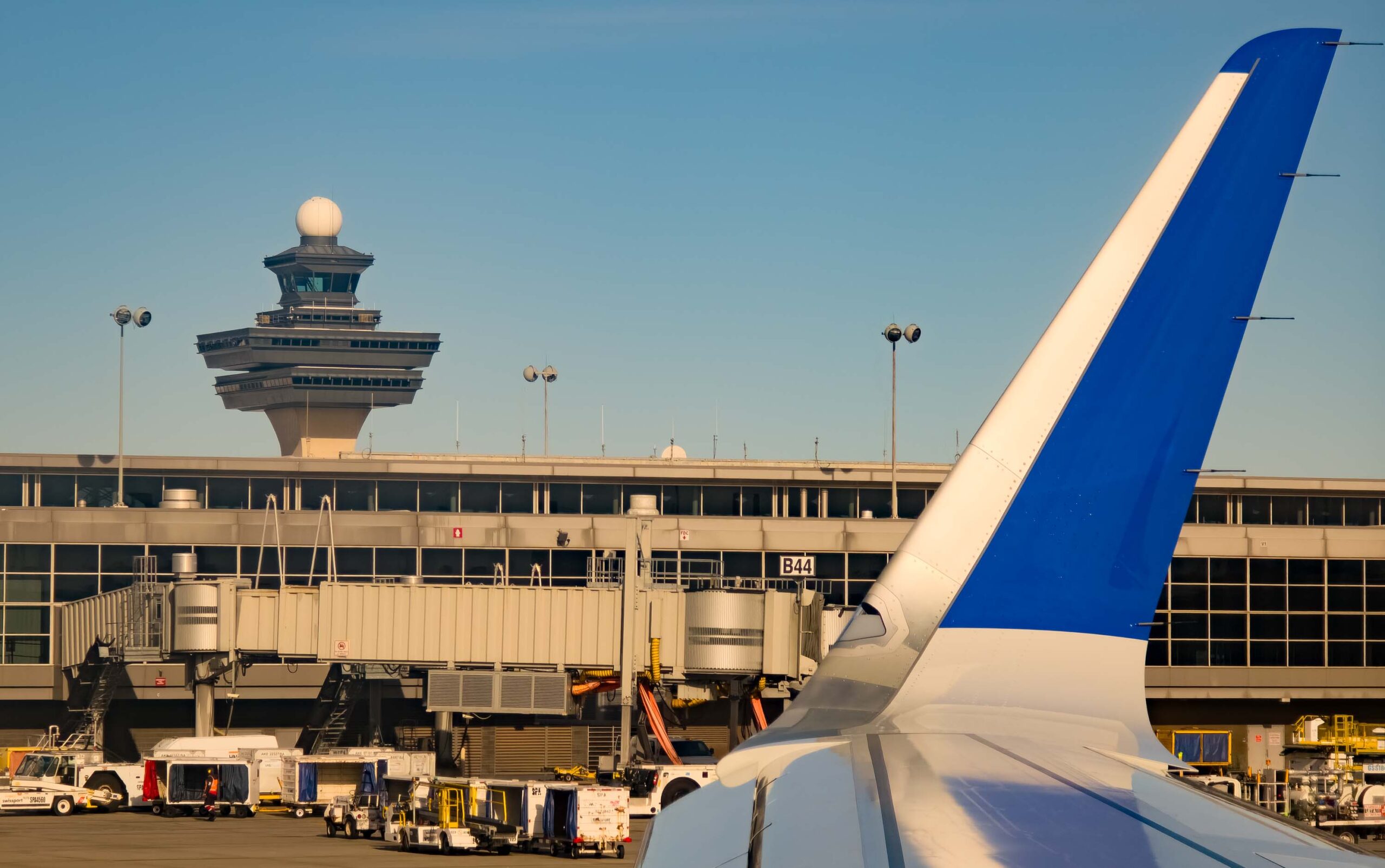
Figure 1. Partly obscured here by the 1978 A/B concourse, the original Dulles air control tower, designed by Eero Saarinen, was in service from 1962 to 1981. It is now preserved as an iconic work of mid-century-modern public architecture. January 1, 2026.

In June, 1973 I had just graduated from college and was travelling with my parents to Kenya to observe an eclipse and go on a wildlife safari. We had arrived at Dulles early and I was already keeping a promise to myself to more aggressively pursue photography. That is, I was wandering around taking photos (Figure 2). I noticed a huge wooden ladder outside the main terminal, inspected it for a minute, and returned to where my parents were waiting. I left my sport coat with them and told them I was going to go take some more photos and would be back in plenty of time to board the flight.
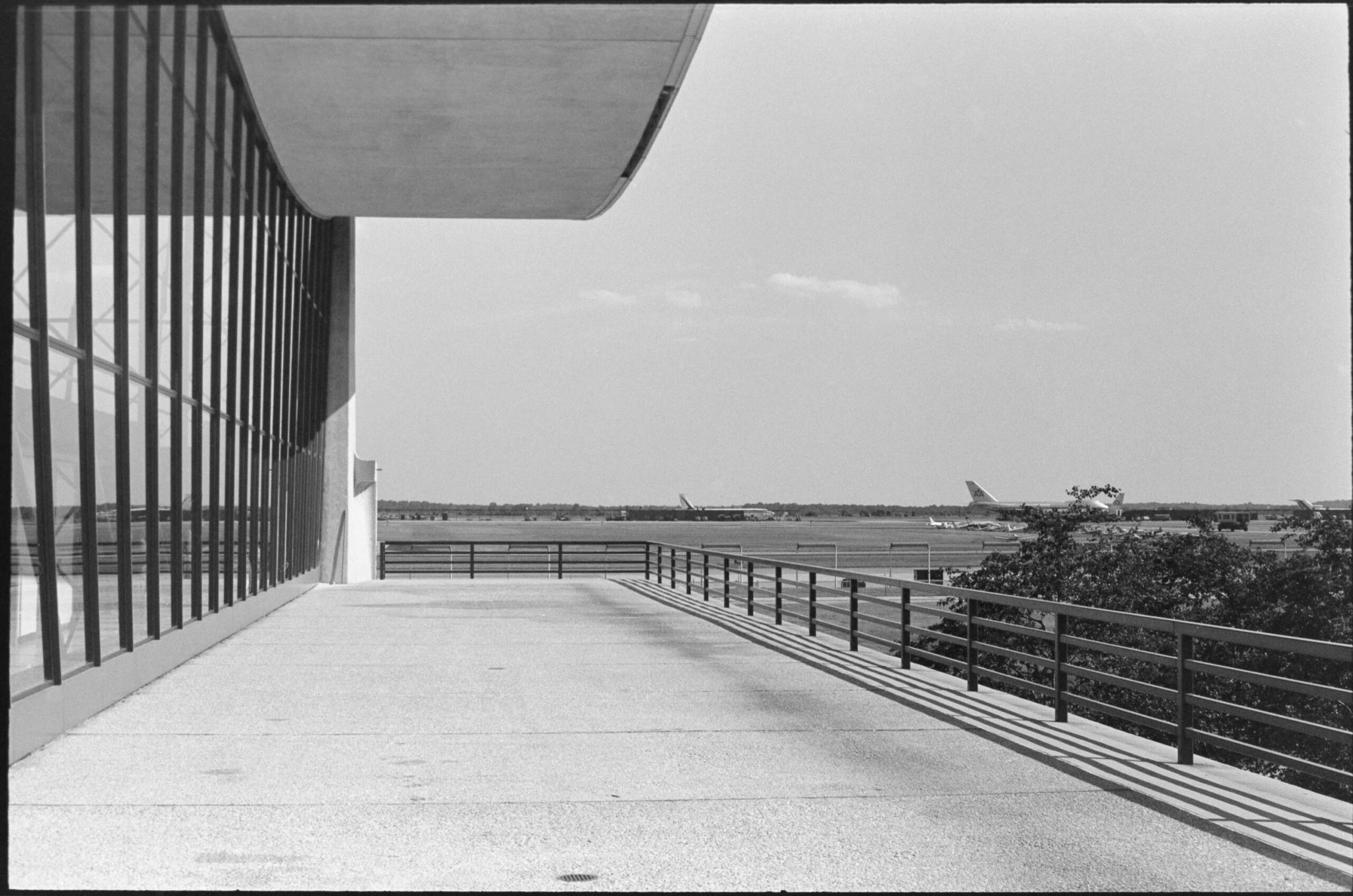
Figure 2. Looking south along the west glass wall of the main Dulles terminal building in 1973. The only way for passengers to get to the planes way out there was by mobile lounge. Today, a pair of 3/4-mile-long concourses fill this view, and a new air traffic control tower is almost a mile in the distance. June 1973. Plus-X negative by C. Fastie.

In 1973, there were few security cameras and no army of security personnel. But due to the huge glass walls of the terminal, the big ladder was in plain view of hundreds of people inside. As a new college graduate, I had decided that it was time to make my life more consequential, so I just climbed up that ladder like I was the only reason someone had put that ladder there. In a minute I was on the roof of the building Eero Saarinen considered his greatest work. The first photo I took reveals exactly where I was (Figures 3 and 4).
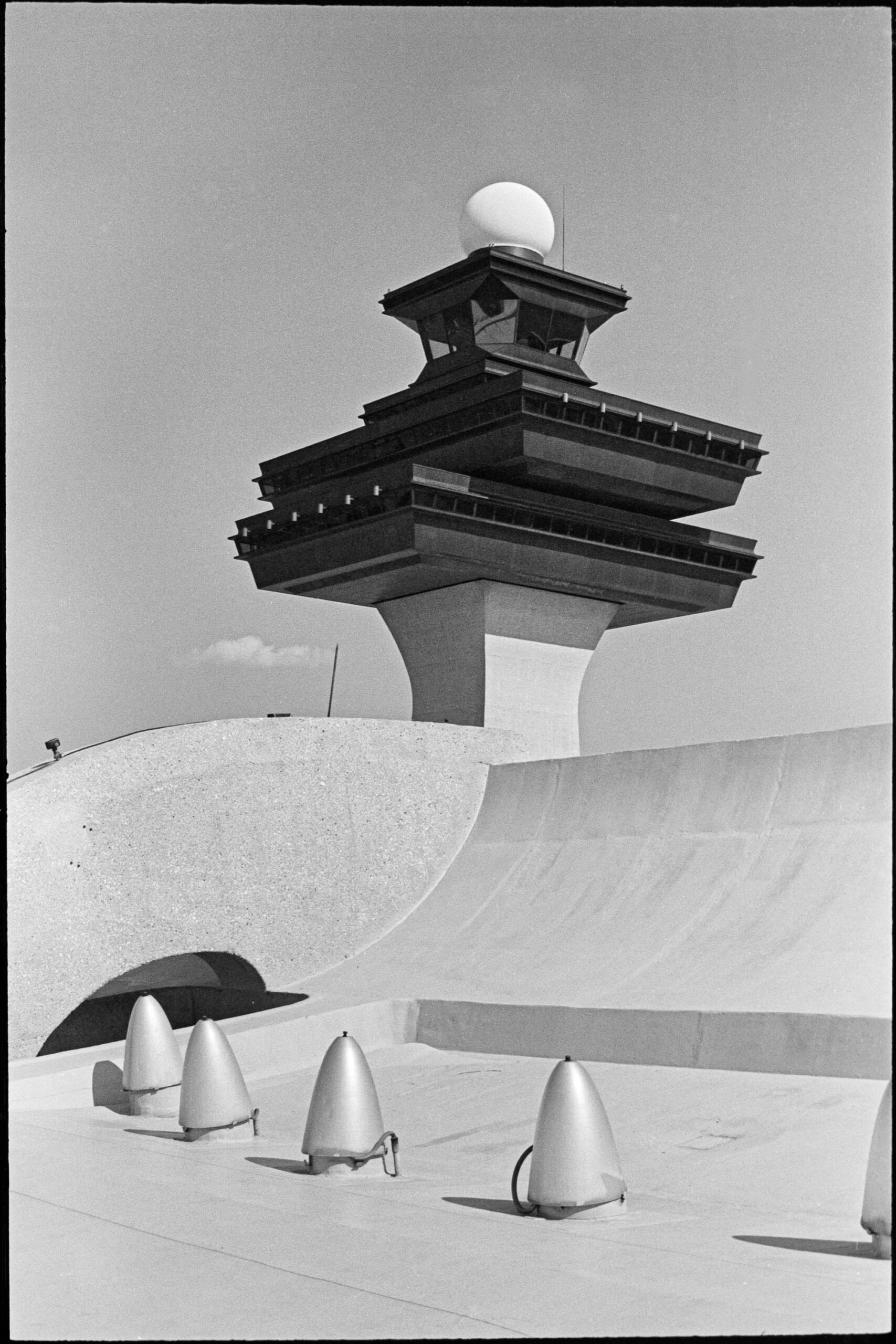
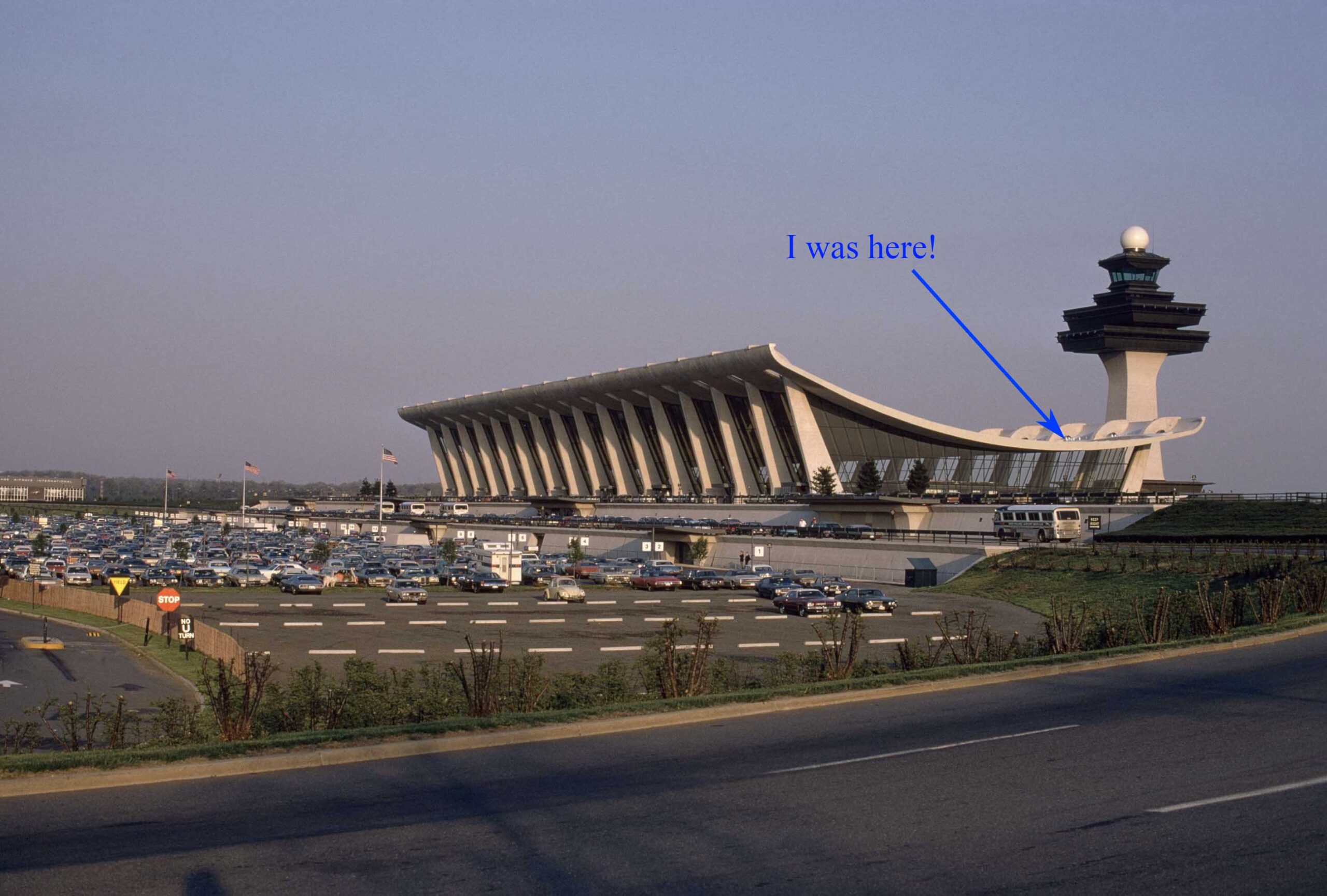
Figure 3. Dulles traffic control tower from the roof of the terminal building. In the foreground is the up-turned southern lip of the terminal and one of the curving support structures. This must be the third support structure from the west end. June 1973. Plus-X negative by C. Fastie.
Figure 4. My 1973 location in a ca. 1964 photo of the terminal building. The tall side of the terminal is the northern side. This photo from the internet had no date so I asked ChatGPT. It assigned a date based on the car models in the parking lot (Chevrolet Impala ’61–’64, Ford Galaxie ’60–’64, Plymouth Valiant / Dodge Dart ’60–’63) and on the absence of more recent models. What an amazing building; I’m glad Trump is going to fix it.

The second photo I took from the roof was of a mobile lounge by the southwest corner of the terminal (Figure 5). The western edge of the roof is in the frame, indicating that I was just walking around up there. The mobile lounge was key to Saarinen’s architectural vision of the airport terminal as a monument to the civilized, and civic, future of air travel — separated from the industrial and corporate world of planes, fuel, and other services. That vision died as corporations, not municipalities, took control of air travel. This is the video Eero Saarinen made in 1958 to convince everyone that his vision was correct.
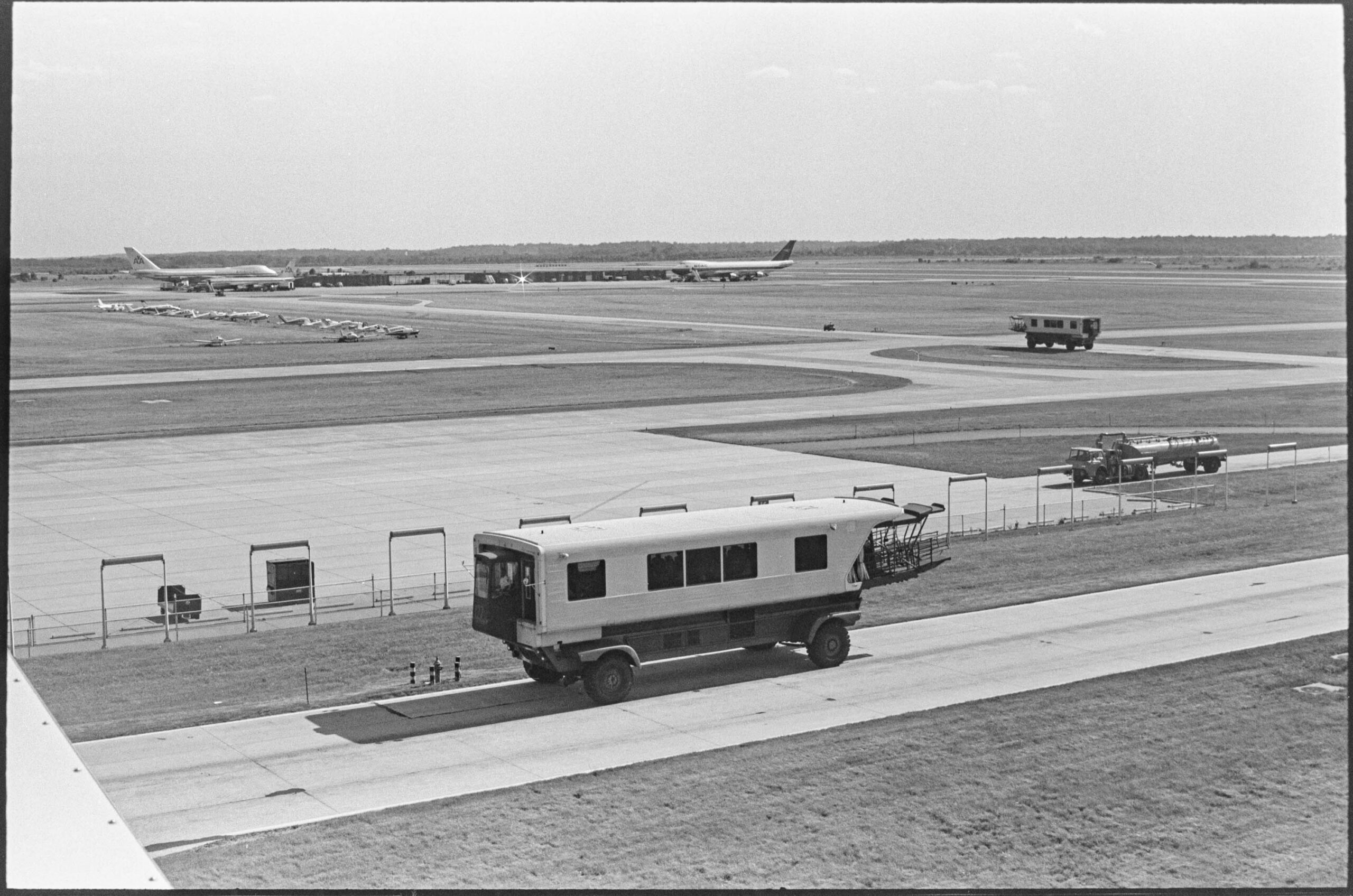
Figure 5. Two of the original mobile lounges in operation taking passengers to their planes. The mobile lounges were the primary method of getting passengers to planes only until about 1978 when Concourse A/B opened (within the view above) and jet bridges made simple connections between gates and huge planes. Taken from the roof at the western edge of the terminal. June 1973. Plus-X negative by C. Fastie.

The next photo was taken from the southwest corner of the roof by clambering up the up-turned lip. I don’t remember how hard it was to get a clear view of the control tower, but I managed it. This photo was a full portrait of the iconic tower (Figure 6).
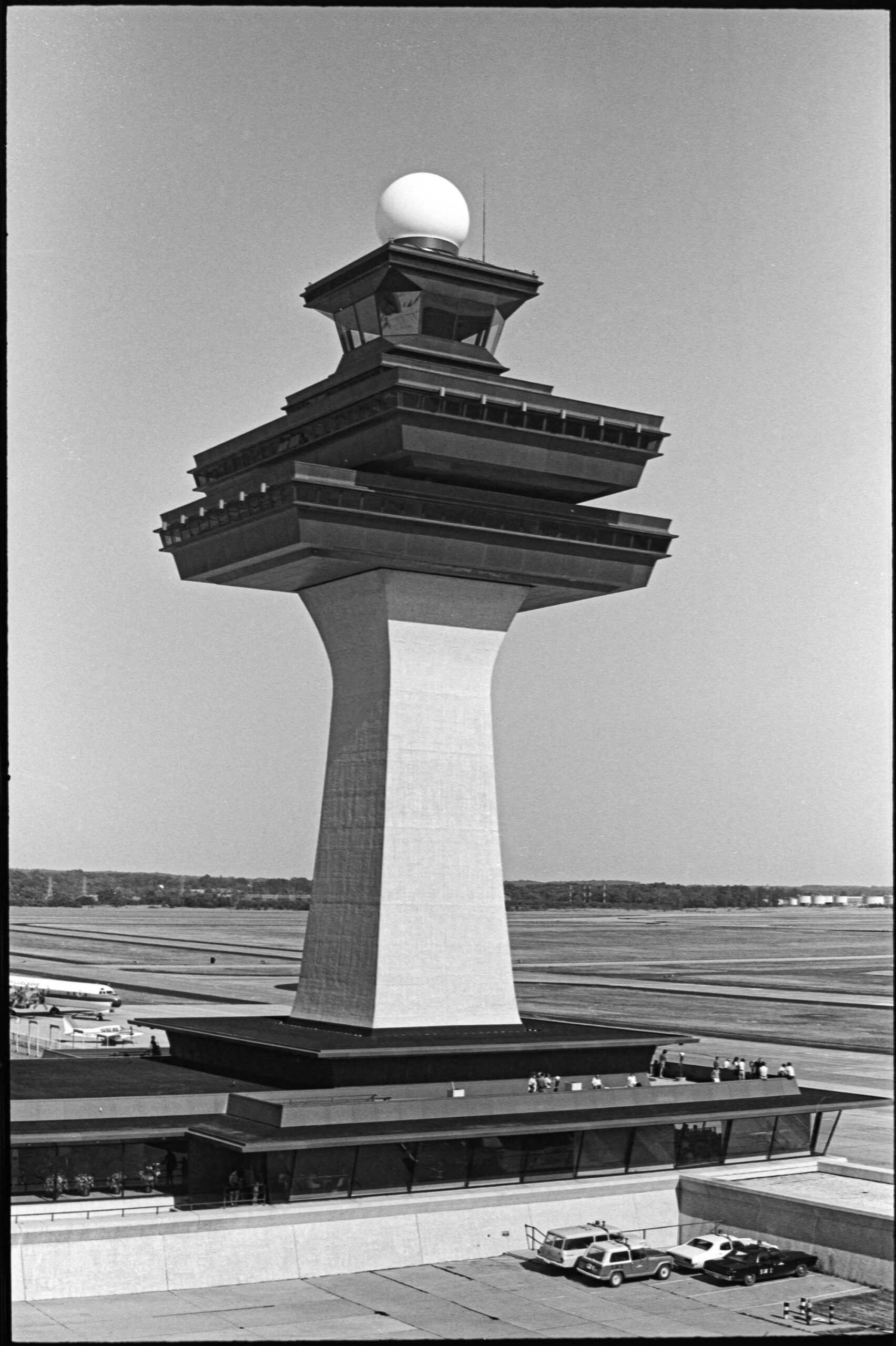
Figure 6. Dulles air traffic control tower from the roof of the terminal building. Today, the airfield in the background is littered with concourses, jetways, and equipment. The observation deck at the base of the tower was open to the public, including non-ticketed visitors, in the spirit of an airport being a welcoming, modern, public attraction. June 1973. Plus-X negative by C. Fastie.

There are lots of old and new photos of the Eero Saarinen control tower at Dulles. I have looked at a hundred of them online, and none is from the angle of the photo in Figure 6. I have never seen another photo of the tower taken from the terminal roof. I guess they didn’t leave that ladder in place for long.

I rejoined my parents in time to don the sport coat and ride a mobile lounge to the plane that took us to Rome. I never mentioned to them where I had been, and never printed the photos I had taken (I have never seen them enlarged until now). The next photo on that roll of film, taken the next day, is Figure 7. This was a remarkable two-day lesson in the history of public architecture.
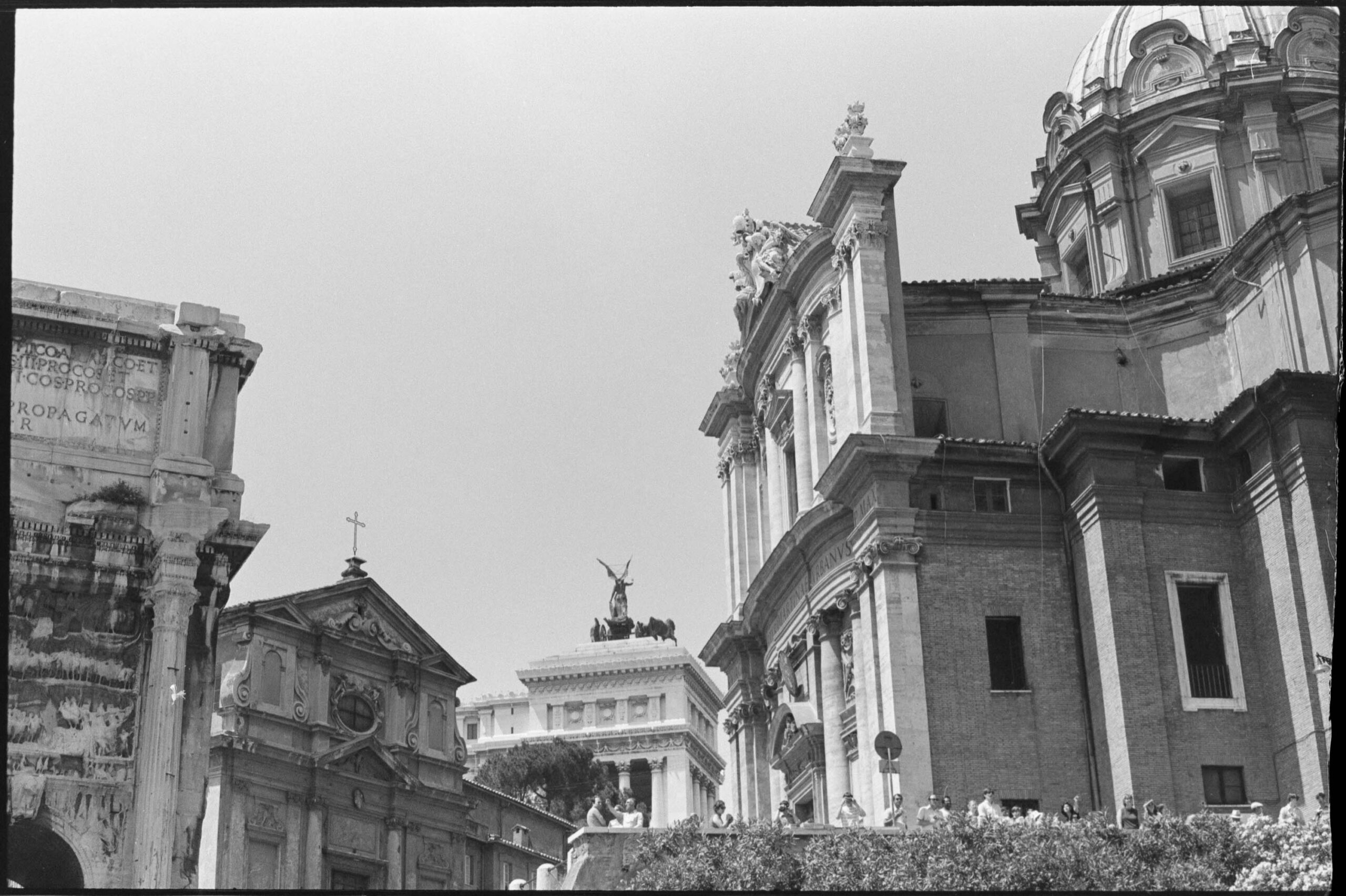
Figure 7. The first photo I took in Rome on the three-day layover before the flight to Nairobi; a pastiche of 1700 years of monumental architecture from the edge of the Roman Forum. At far left is the Arch of Septimius Severus (built 203 CE). Next to it is the Church of San Giuseppe dei Falegnami (built 1597–1663). At center is the Vittoriano (Altare della Patria, built 1885-1935). On the right is the Church of Santi Luca e Martina (built 1635–1650). Like the day before, there are lots of people on the observation deck. June 1973. Plus-X negative by C. Fastie.

As I taxied at Dulles for take-off to Denver on New Years Day, I took a photo of the Dulles ground operations control tower with the historic 1962 tower in the background (Figure 8). This is not the new FAA air traffic control tower (which I never saw, Figure 9).
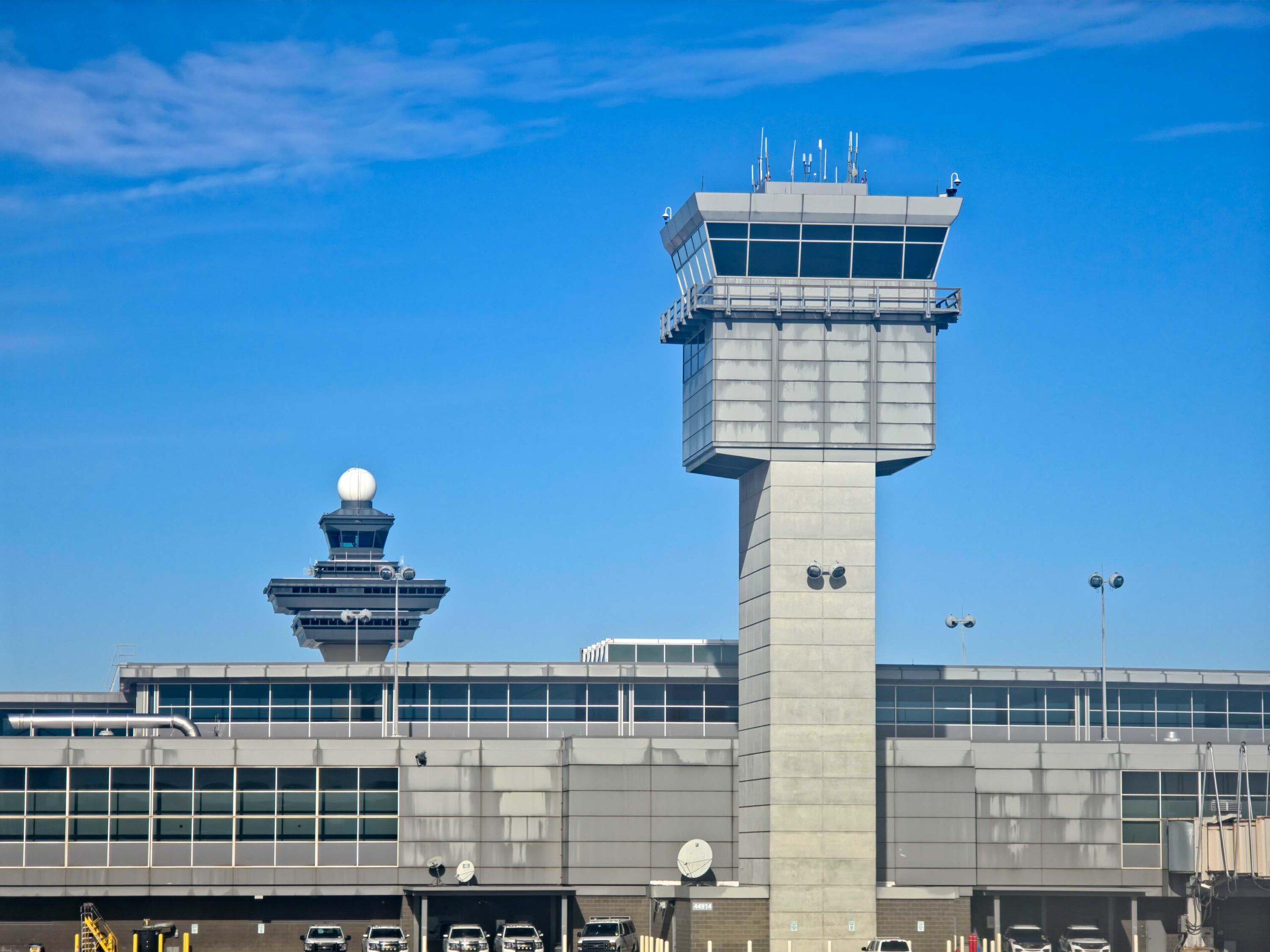
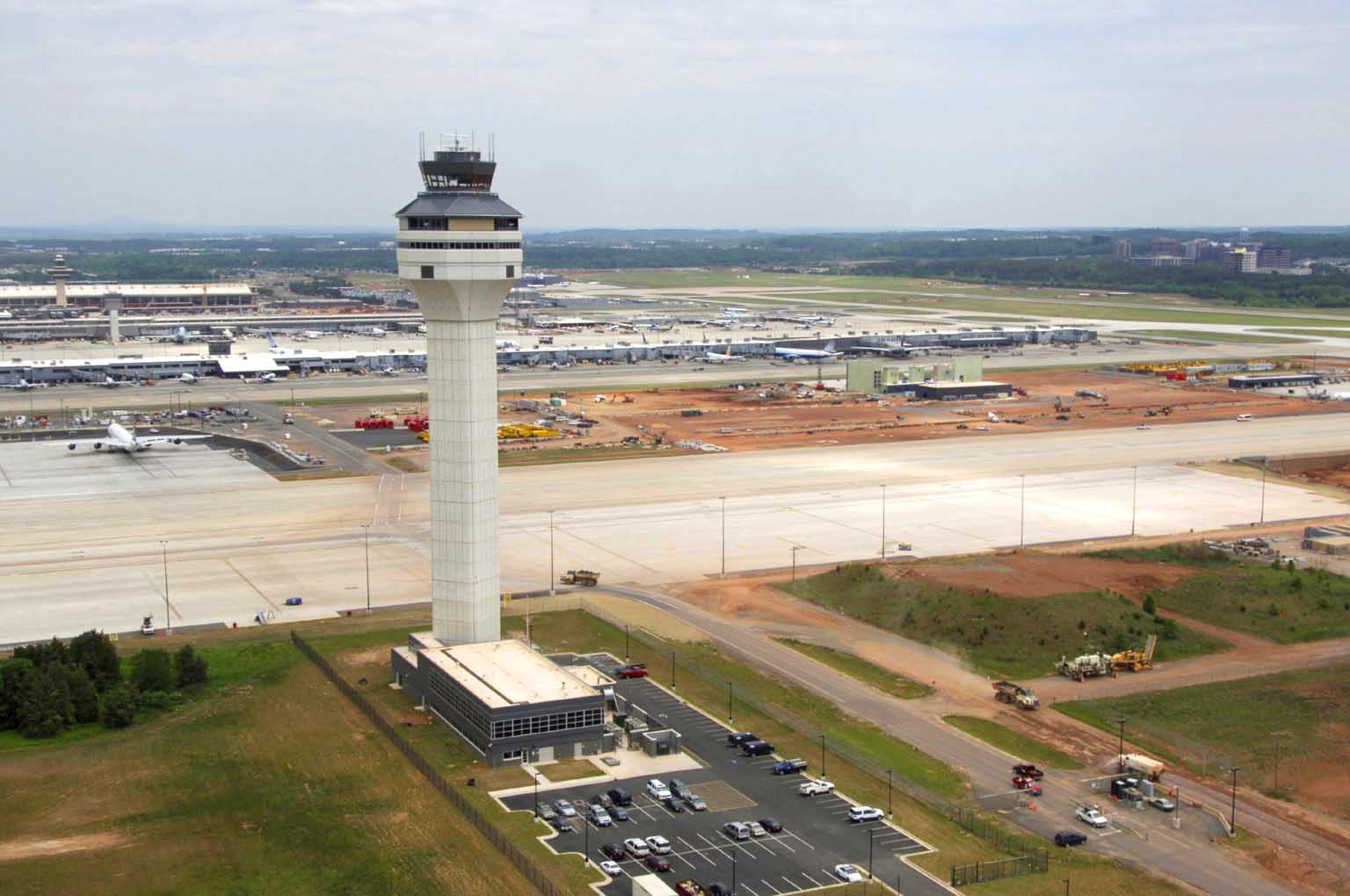
Figure 8. Eero Saarinen’s original 1962 tower (left) and the 1978 ground operations control tower by the A/B Concourse (right). This tower monitors and directs gate arrivals and push-backs. It is not operated by the FAA. January 1, 2026.
Figure 9. The handsome current FAA air traffic control tower at Dulles, built in 1981. It is lined up with the other two towers, both visible here: the ground operations control tower at the A/B Concourse, and the original historic tower. This tower mimics the tall, isolated, bulging style pioneered in the 1960s and 1970s at large airports like LAX, JFK, and MIA. Photo from the internet.

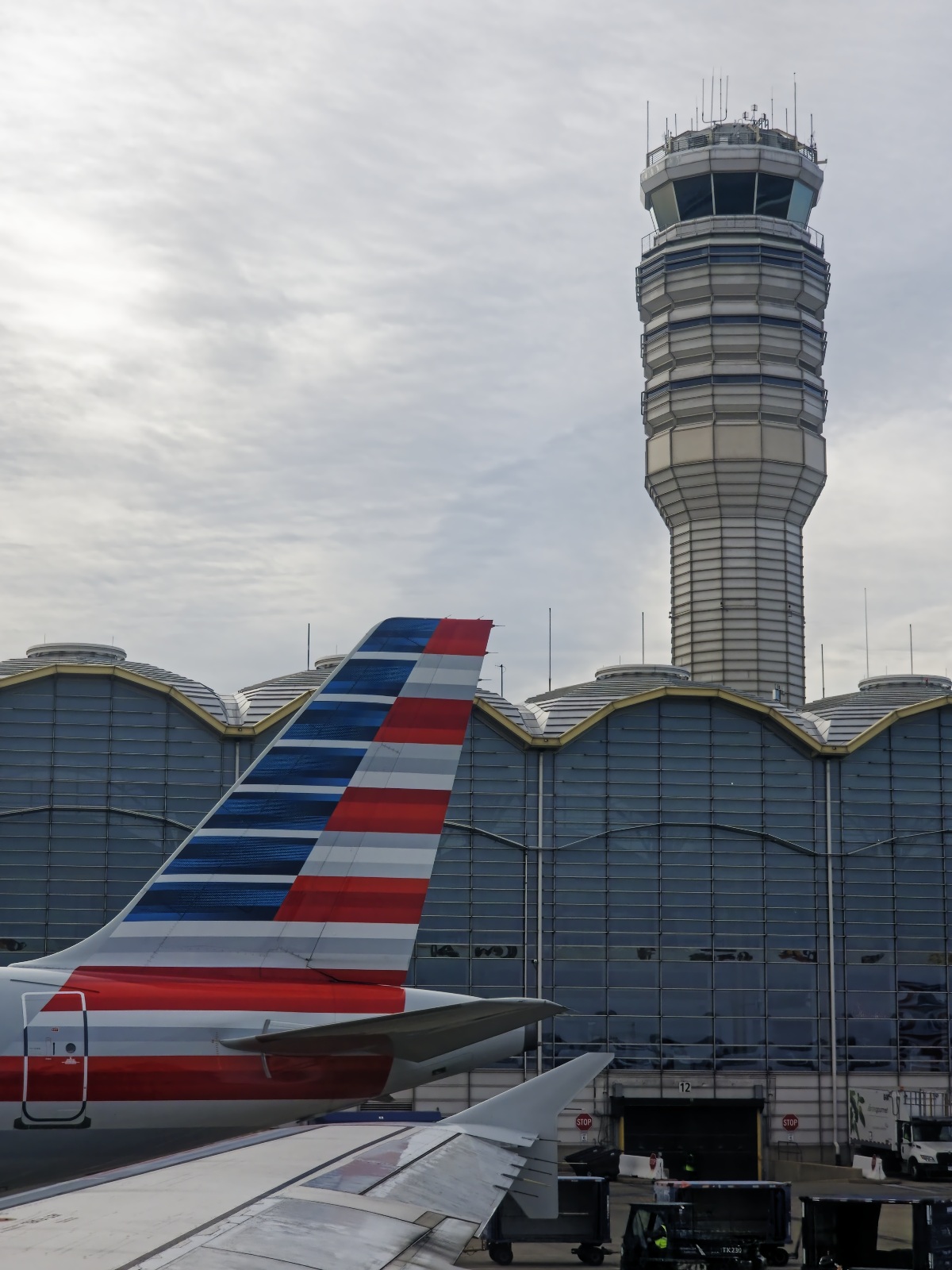
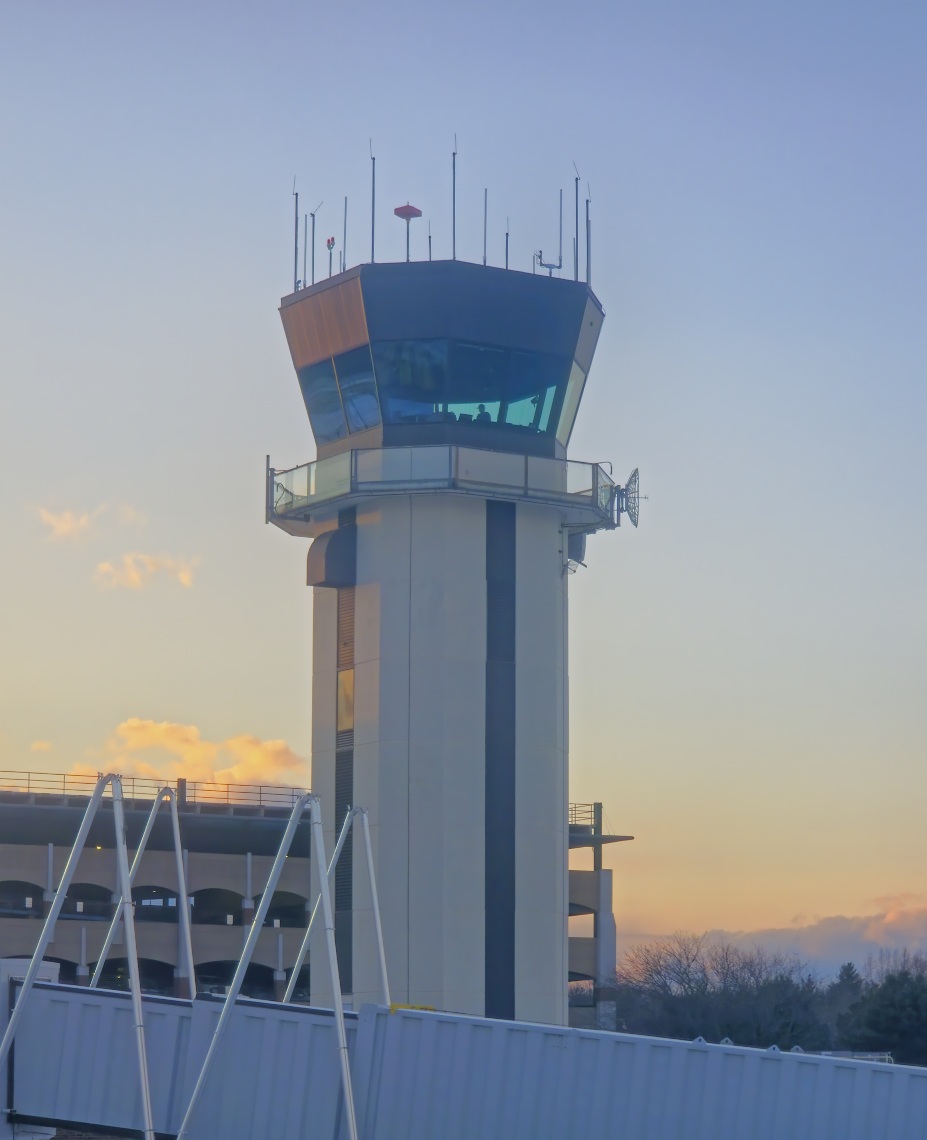
After seeing Eero’s iconic tower at Dulles (IAD) last month, I was paying attention for the rest of my journey. Next stop was the unimpressive FAA tower at Denver (Figure 10). On the way home I got photos of the modern, tall, FAA towers at Chicago (Figure 11) and Reagan (Figure 12). And then home to the 1989 tower at Burlington (Figure 13).
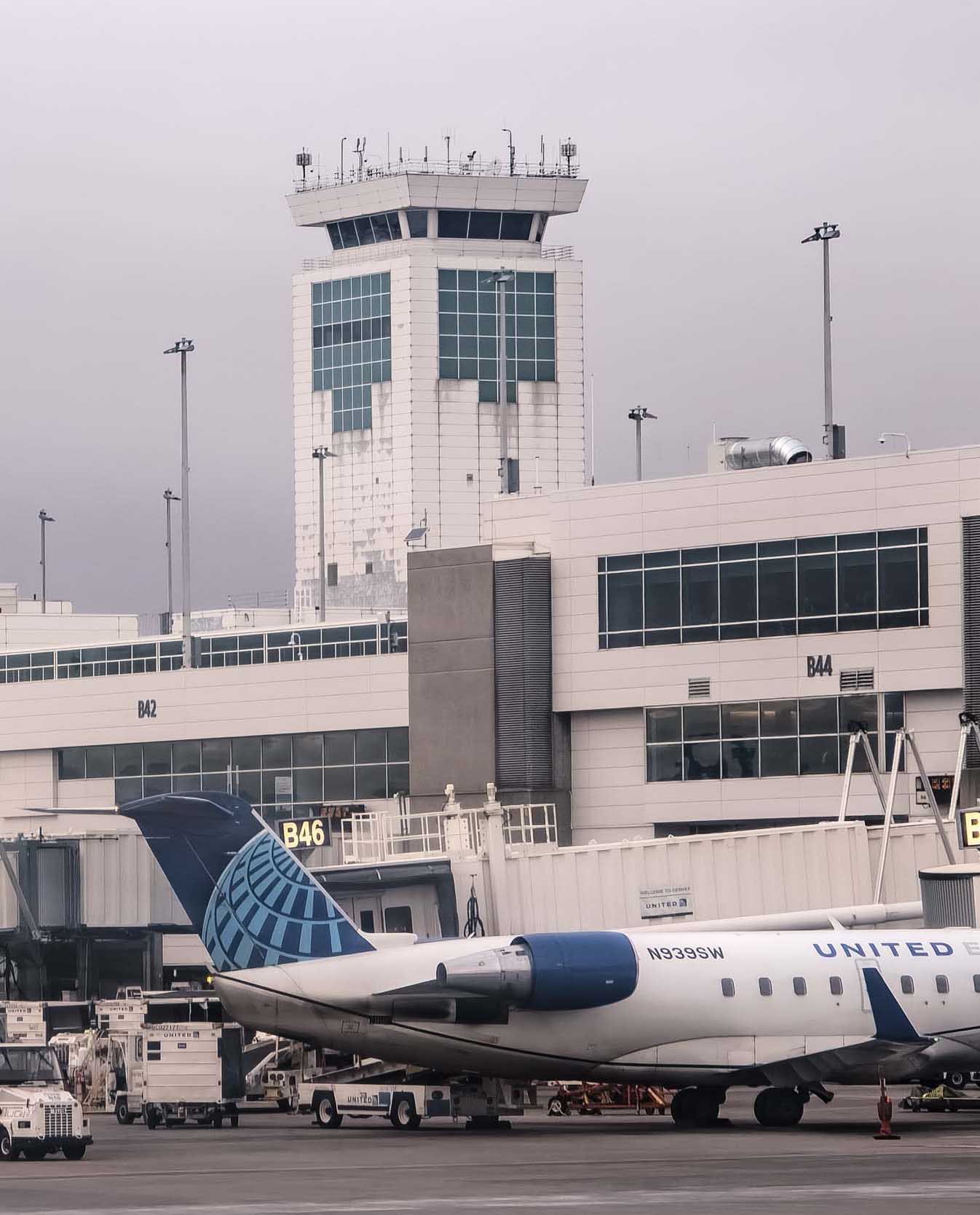
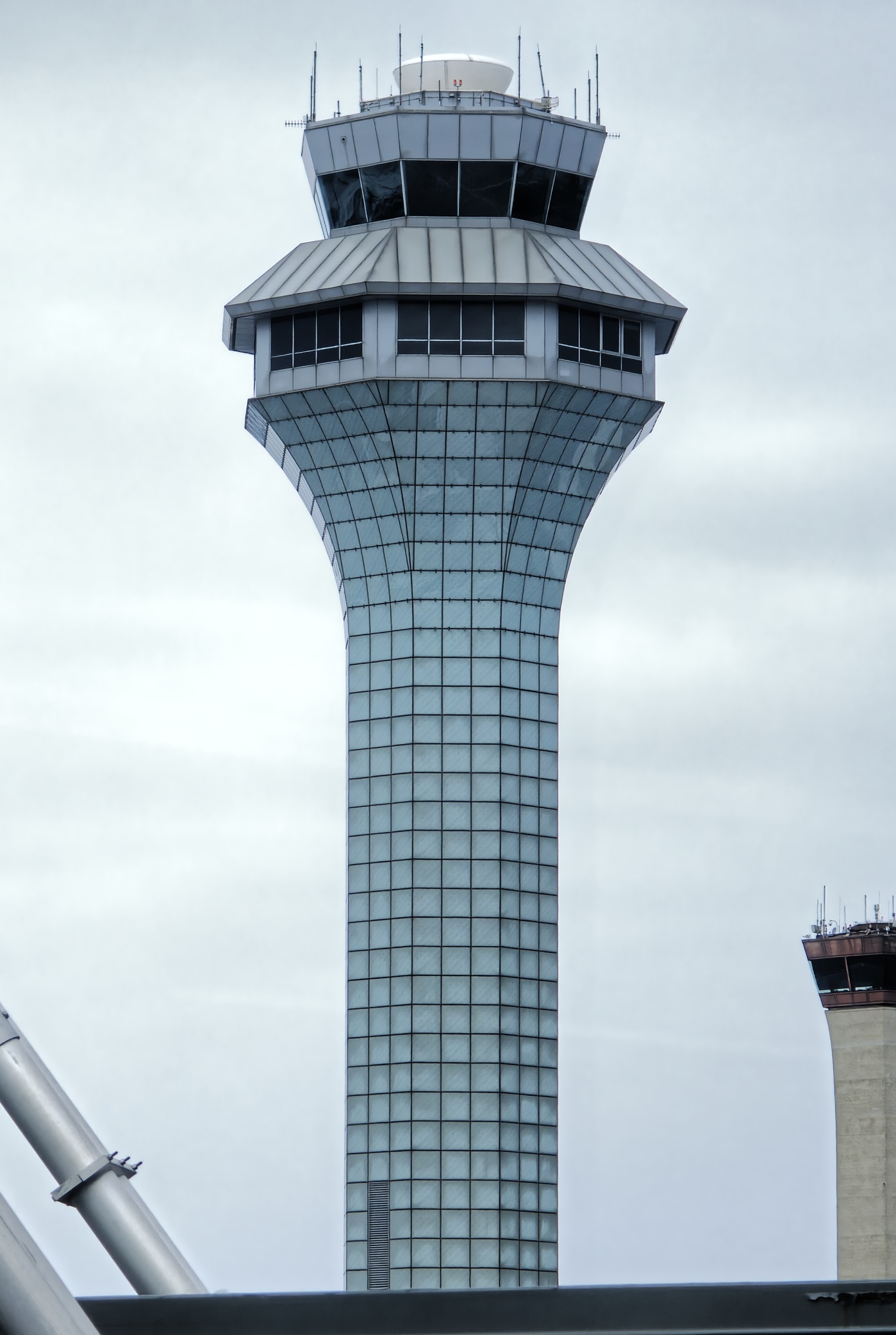
Figure 10. The 1995 FAA air traffic control tower at the Denver International Airport (DEN). An undistinguished and unlikeable effort compared to the 1981 IAD, 1996 ORD, and 2000 DCA towers.
Figure 11. The 1996 FAA air traffic control tower at O’Hare International Airport (ORD) in Chicago. This could be from a science fiction movie but the roof brow would be darker, a perfect panopticon.
Figure 12. The 2000 FAA tower at Ronald Reagan Washington National Airport (DCA). The upper part of the support tower seems to be compressed by the weight above it, but it doesn’t feel like there is that much weight above it. Architecturally, I give this an 8 out of 10.
Figure 13. The 1981 FAA tower at the Patrick Leahy Burlington International Airport (BTV). Not bad for a 1981 effort at a two-strip airport.

After that successful start to the 1973 trip, I was strangely content on the flight to Rome. I was confident that I would make the effort required to capture some worthwhile images. No more ladders got involved, but maybe starting out strong made a difference: https://photos.app.goo.gl/eQ6dHTkrSnSCxXuDA

Leave a Reply

Your email address will not be published. Required fields are marked *